As a children’s book author, my job is to make things up, but I pinky-promise that I’ll be honest with you in this post. So here’s the truth: I can’t tell you how to be funny. I don’t think humor really works that way. It’s something you have to cultivate within–like a playground you build all by yourself inside your lil’ heart.
Anyone can build their own humor playground; it isn’t exclusive or anything. But you can’t take shortcuts, and you can’t hire someone to build one for you. Luckily, the hard work is fun, and you can get ideas from other people’s designs to help you along the way.
I really enjoy my playground, and I wouldn’t want to live without it, but there are some people out there who don’t want one at all. I’m guessing they probably wouldn’t be reading this post, but just in case, here is a quick reminder that you do NOT have to be funny to make great books. If you are forcing yourself to write humor because other people say it’s the way to get a book deal, I hope you can give yourself the permission not to be funny and to trust in your own unique voice.
But for those of you who are itching to play, put on those construction helmets, baby! Cuz I’m sharing the blueprints for how I built my humor playground. I hope it will give you some ideas as you build your very own.
FINDING THE FRAME
Some people might say that jokes are the foundation of humor, and they have a right to build their playgrounds that way. But I see jokes as the stuff you play with, not what you play on. My jokes land best when they are built on a solid foundation of experiences, emotions, and personal taste.
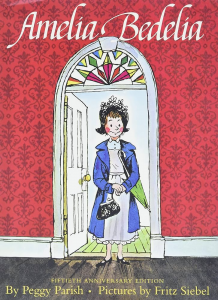
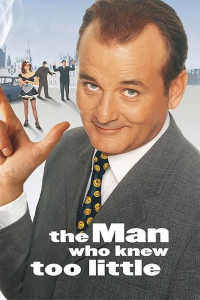
To build a solid foundation, you need the right frame. To find the right size and shape, I collect other people’s playground designs that inspire me, especially from childhood like Amelia Bedelia, Where the Wild Things Are, The Stinky Cheese Man, The Phantom Tollbooth, The Westing Game, The Man Who Knew Too Little, Parent Trap, Matilda, Harriet the Spy, Captain Underpants, What About Bob?, etc. (They all don’t have to be laugh-out-loud-funny. It’s more about the spirit of the thing.)
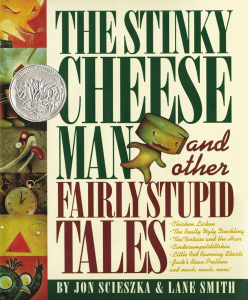
These books and movies were made by creators as they played on their very own playground. This means if I can analyze why I’m drawn to each one, I can get a sense of the foundation they used and combine the specific things I like into my own unique frame. Mine looks like playful mischief, subversiveness, slapstick fun, whimsy, wit, rebellion against authority, not-mean sarcasm, earnestness, tension grounded in complex emotion, irony, and a hint of darkness.
Technically I could just take one of my inspirations and copy their playground as exactly as possible. But I don’t think that’s the best idea because any story I make while playing on that playground will essentially be someone else’s. If you take the time to collect a variety of inspirations, you’ll end up with a more unique playground and, as a result, you’ll discover the stories that only you can tell.
GATHERING THE FILLING
Once I have my frame, I can now fill it with the good stuff. You know that blend of cut up tires that you can bounce on if you accidentally fall off the monkey bars? That’s the most expensive playground filler out there. Every time you collect a memory, experience, emotion, question, or thought, you add a bouncy piece to your foundation.
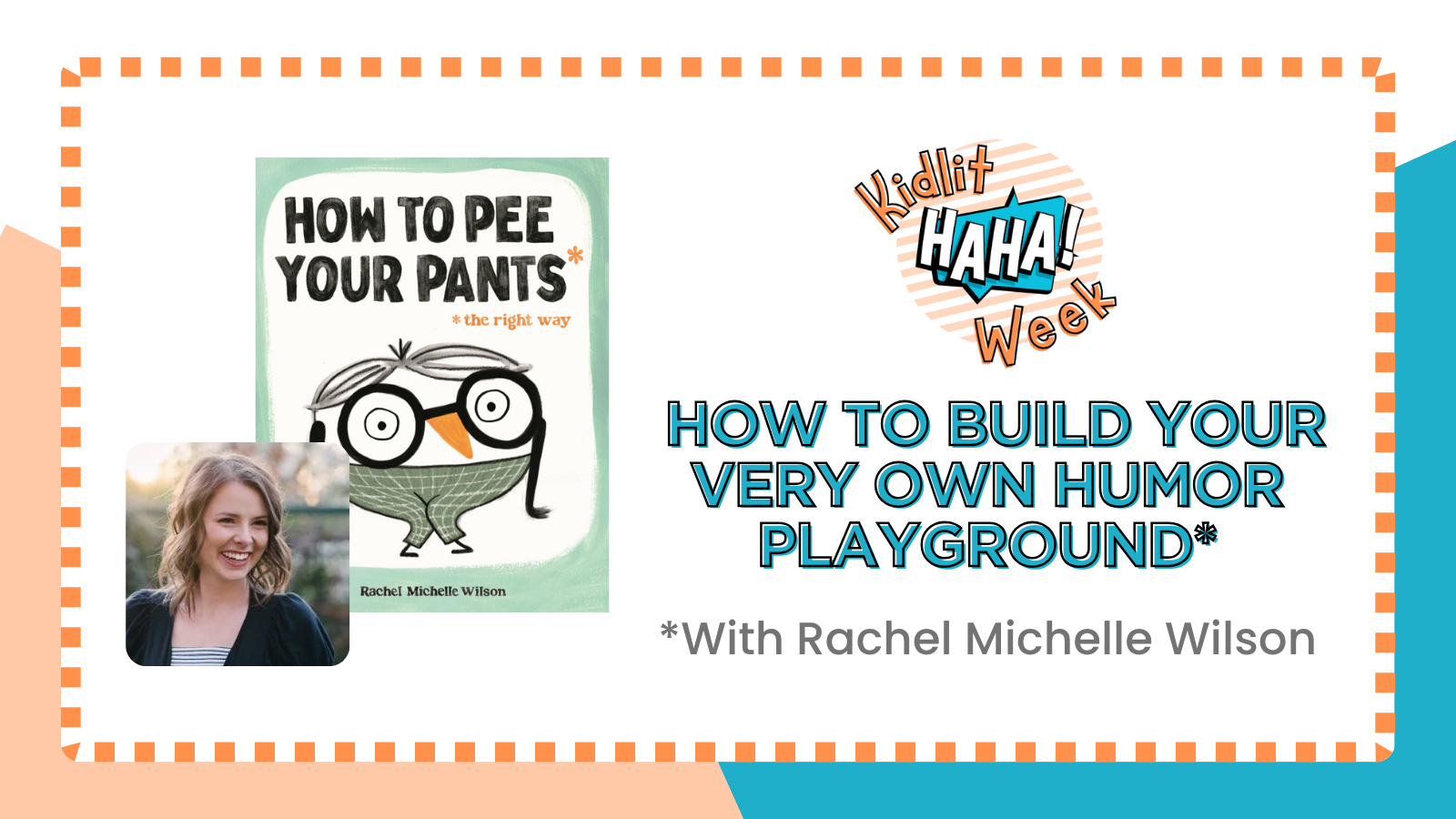
You never know how the bits you collect will combine into something surprising. Like my picture book How to Pee Your Pants: the Right Way was inspired by:
- Tire piece #1: My own embarrassing childhood pee pants story involving bubble wrap (yes, that really happened to me)
- Tire piece #2: The time my friend peed her pants when laughing too hard at a middle school sleepover which prompted everyone to share their pee pants stories; laughing together made the shame melt away
- Tire piece #3: Witnessing another adult struggle to say out loud that they had peed their pants as a kid because they were still carrying the shame
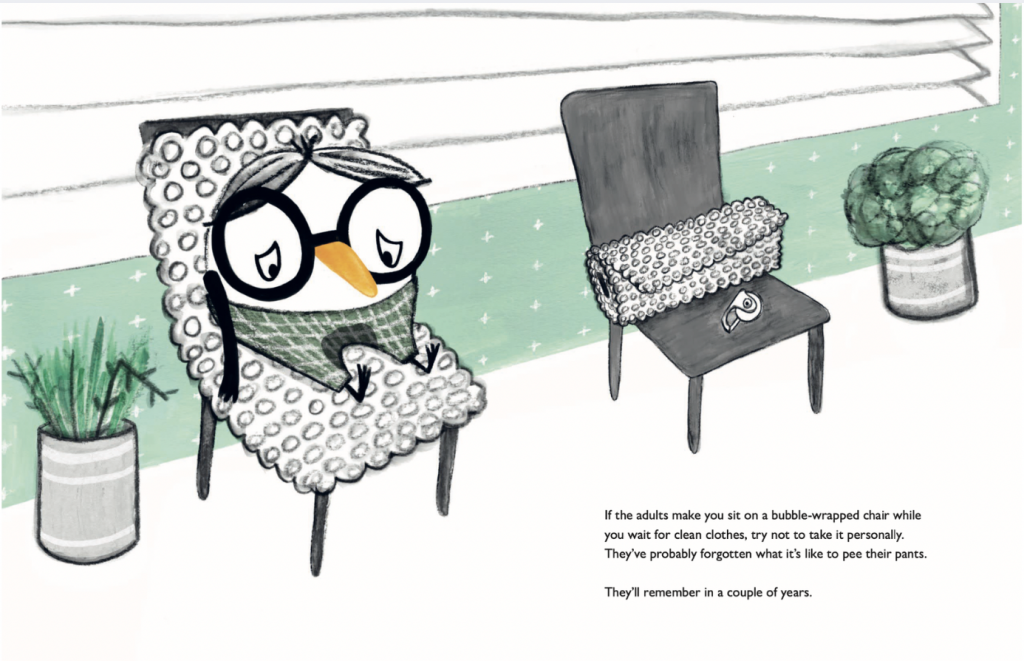
Once I threw those pieces in my playground, I felt safe to explore and play. Eventually, those pieces helped me make the book I wish I had when I peed my pants.
CHOOSING THE EQUIPMENT
Now for the funnest part! You get to decide what tools of humor you want to play with on your playground. I’ve included just a few of my favorites.
The teeter-totter: the page turn
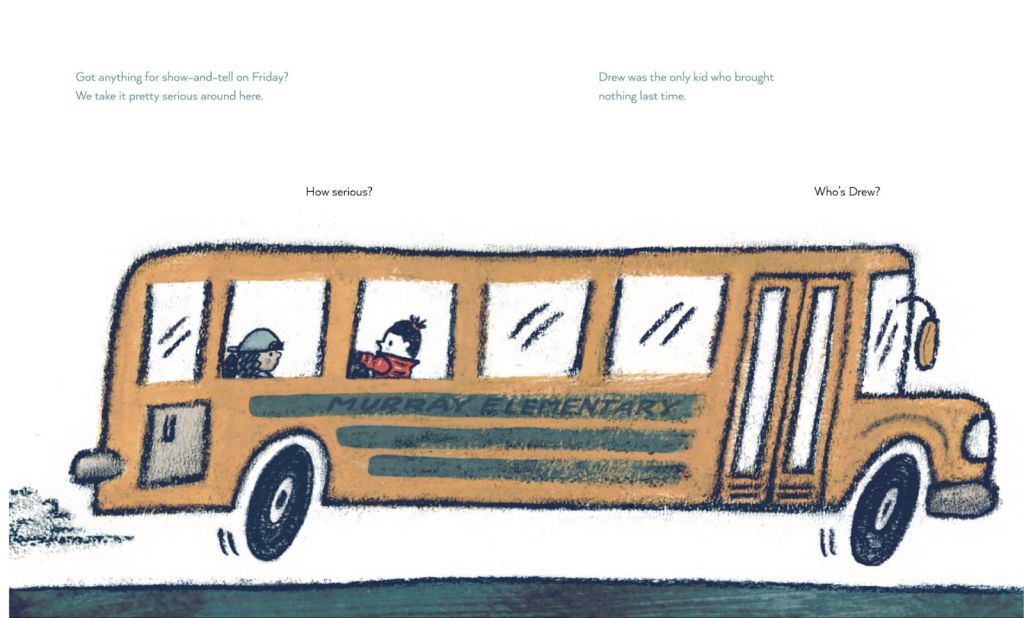
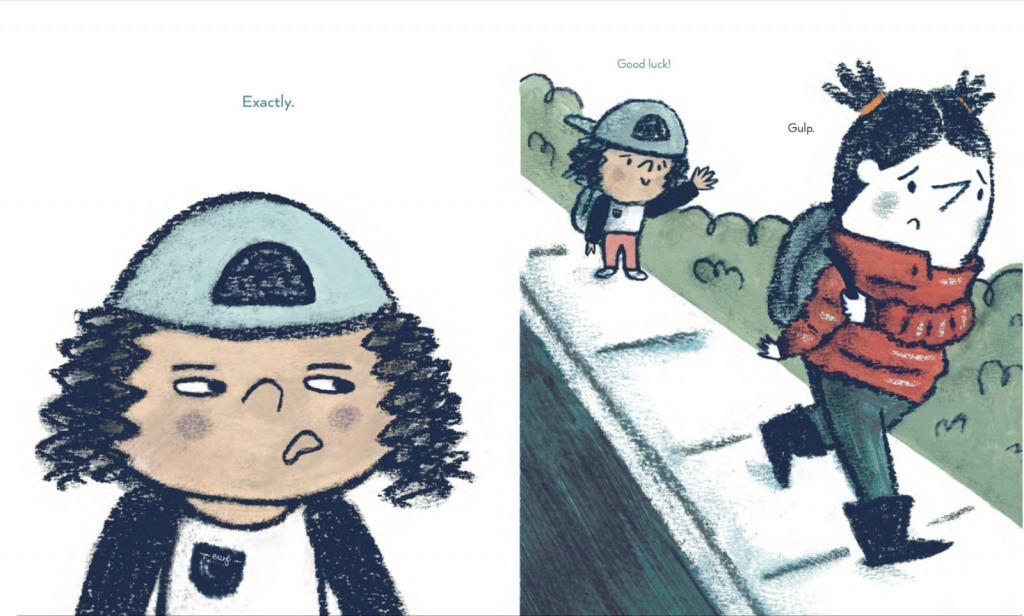
You know that moment when you get to the top of the teeter-totter and there is a slight pause in the air when you feel on top of the world? Page turns can feel like that too! You can use this pause to do so many things, including get a laugh from your audience.
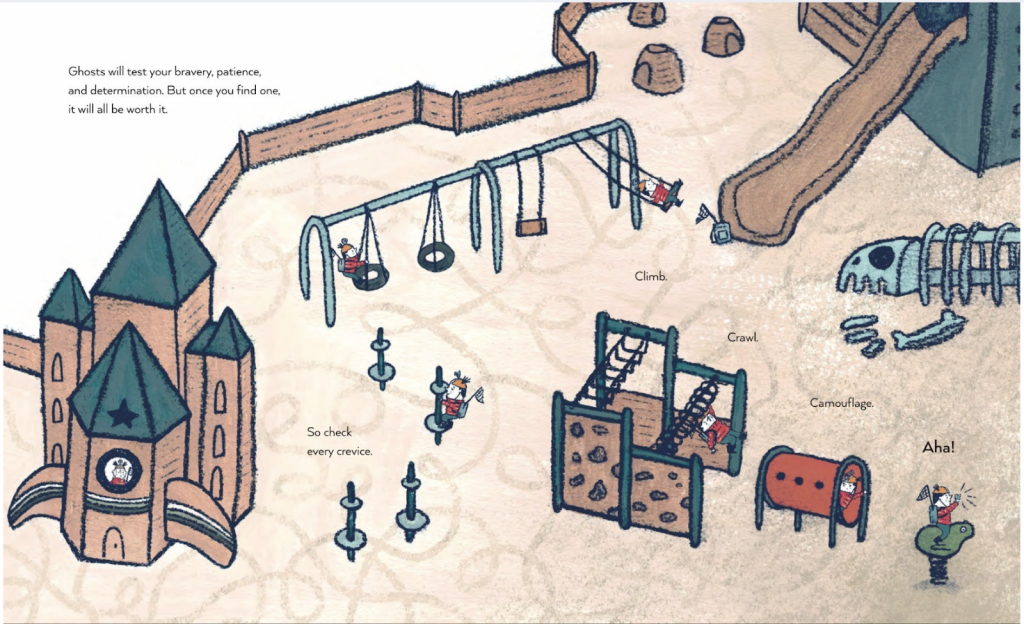
In To Catch a Ghost, my main character Sam finds out that show-and-tell is a big deal at her school, but she has nothing to bring. The nerve-wracking tension culminates in a page-turn pause, then a release of that tension with a joke.
The merry-go-round: spinning the emotional tone
As a storyteller, you are like that kid who pushes the merry-go-round after all the other kids hop on. You determine when to slow down, speed up, or even throw in an abrupt stop; the goal is to craft an experience for your audience. It could be a straight comedy that keeps your audience spinning with lots of jokes. It could also be a dramedy that spins jokes for a while before abruptly stopping for a big emotional moment.
In To Catch A Ghost, the tone of the story feels playful with jokes that build right up to the moment she actually catches the ghost. Then I stop the merry-go-round.
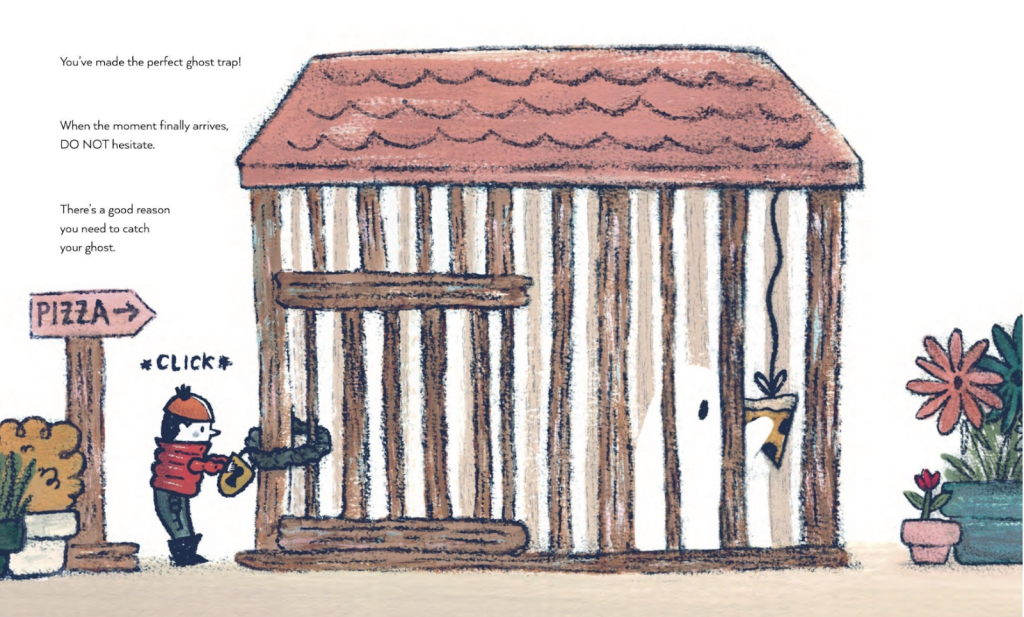
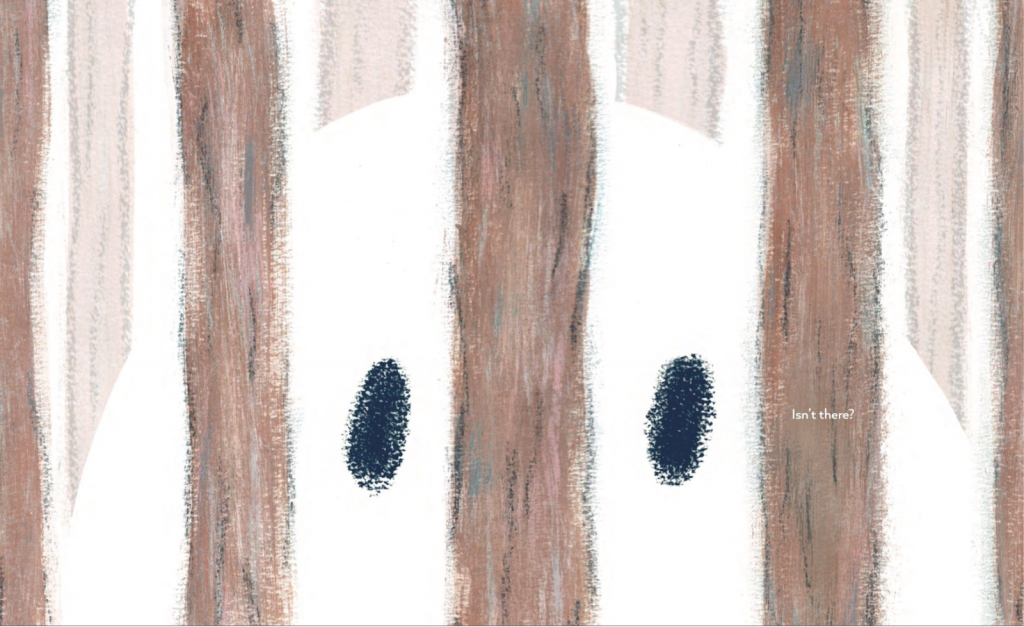
The page turn emphasizes the contrast between the playful humor and my character’s serious moral dilemma.
The swings: the relationship between words and images
I could play with the tension between words and art in picture books all day, every day. (And I do.) I love it when the art swings one way and the text swings another, both saying different things that add up to something neither could do alone. This allows you to play with reader expectations, show a visual joke before the text is read aloud, push things into absurdity, and more.
In How to Pee Your Pants: the Right Way, I explore the line between reality and imagination. On this spread, the text offers a straightforward solution to peeing your pants (calling for help), but the illustration pushes it into the absurd (an underwear bat signal).
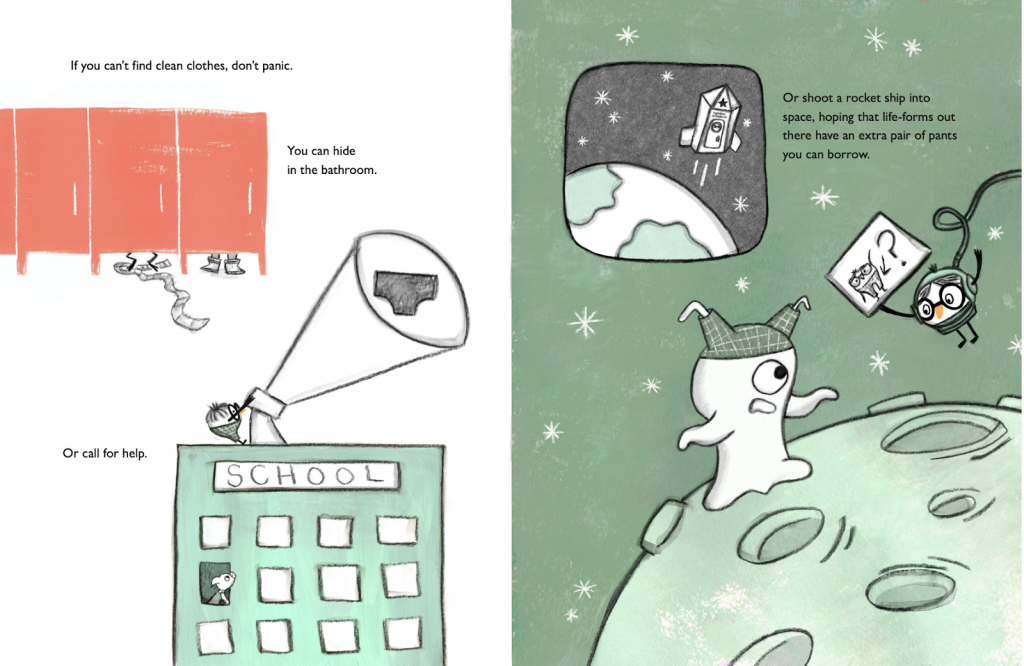
You can discover so many jokes by playing on the swings.
TIME TO PLAY!
Now that you’ve built your foundation (your unique voice), filled it with the good stuff (your experiences), and chosen your equipment (your tools of humor), you are ready to play on your playground!
But before I go, as the daughter of a lawyer, I need to cover my butt, so here is your playground warning label.
WARNING: Playing on this playground may result in amazing stories that everyone will love. It may also result in ego-bruising, crying, broken bones, broken hearts, and metaphorical deaths of the self. Your equipment may break at any moment, and your playground may stop working at any time. Rachel Michelle Wilson is not liable for any of it.
After reading the warning label, some people wonder if they should play at all.
What if I fall on my face on the monkey bars?
And what if everyone sees and laughs?
Is the risk worth it?
My answer to that is exactly what a kid would say. Yes, it’s worth it. Why? Cuz it’s fun. The things you learn, the friends you make, and the readers you connect with while playing on your playground make any potential falls and tears worth it.
So I hope you go build your playground. And then I hope you play on it.
If you would like to share your playgrounds with me, you can find me on my website, my Instagram, or my newsletter.
P.S. My current playground is How to Escape a Playdate which comes out this October but you can preorder now. Fingers crossed you have even more fun reading it than I had making it!
Comment to Win!
Kidlit HaHa Week is giving away one copy of To Catch a Ghost (US ONLY)
To enter, comment below with a piece of playground equipment (and what it represents to you) on your humor playground by April 7, 2026, 12pm ET.
Rachel Michelle Wilson is an award-winning children’s book author-illustrator with a sweet tooth and a dash of sass. Her picture books include To Catch a Ghost (an ALSC Notable Children’s Book of 2026), How to Pee Your Pants: the Right Way (a Kirkus Review Best Picture Book of 2024 and an ALSC Notable Children’s Book of 2025), and How to Escape a Playdate which will be released this October.
When Rachel is not making books, you can find her puzzling over a logic problem, hosting a living room dance party, or paddle boarding near her home in Washington state with her husband and dog.

This is a fun prompt! It was hard for me to choose just one.
I’ll go with the sandbox. For its playful absurdity. When I write humor, I lean into the ridiculousness. In a sandbox, you can create anything you imagine and make it feel real.
I love the idea of the sandbox, because you can actually build something out of the sand itself! We could also use sand molds to help us as we form the jokes…hmm…I wonder what those represent.
Fabulous, fun, and informative! Love the bubble wrap true story and your books. Thanks
Aww thank you so much!
Interesting! I never really thought before about humor coming from authenticty and vulnerability.
Tina Fey puts it best: “When humor works, it works because it’s clarifying what people already feel. It has to come from someplace real.”
This is the most fun visualization and comparison of writing and thinking about writing I’ve ever seen and felt, thank you for this burst of inspiration and for sharing about your work and experiences!!! In building my inner playground, I think there needs to be a jump rope to make every word count with chants and song and prose and rhyme. And there can be one main character jumping through the hoops at a time, or longer jump ropes that allow for friends to work together (or get tangled up in their problem, problem solve, and try again!)
Oh my gosh, the idea of the rhythm of the jump rope is SUCH a perfect metaphor. I love it!
I love the see-saw image and the GASP moment at the top when I feel like if i let go I could fly!
Thank you, Robin!
I love the metaphor of a playground and the way you used the different pieces of equipment as examples. Excellent way to teach this idea. I just read “To Catch a Ghost” and it will be in my April Goodreads Review post of 4 and 5 star books! So fun.
I have a manuscript with a Show and Tell premise that is still not landing. hmmmm
Thanks so much! And ooh, I wonder what playground equipment will be just the thing to help you figure out your manuscript. Maybe other people’s comments will give you some good ideas!
What a great analogy, chock-full of fun examples! That giant, curly slide at the park is the perfect metaphor for the fast turns humor can take, holding the reader in anticipation until the light and joy break through at the finish.
The curly slide! I love how you relate it to the anticipation building up until the joyful end. So good 🙂
So much fun in this post! I love the example of page turns and can’t wait to play with this concept in my current manuscripts. Thanks for the inspiration.
What a fun idea! For me, I think on my playground there would be a lot of equipment being used the wrong way. Swings with people laying on their belly and winding them up so they can spin. Kids climbing up the slides instead of down. Climbers being used for coat storage. I love humour that comes from the unexpected!
PS – no need to include me in the draw, I’m in Canada. Just wanted to participate!
Love the examples, especially the Underwear Bat Signal and your use of page turns to drive the humor. Looking forward to How to Escape a Playdate!
What a fun post. It had me thinking of what you called the merry-go-round. I always loved hopping on that ride, but inevitably someone always got nauseous. Not me, but I felt bad for that child. We don’t want to carry things too far in our stories, do we? LOL! I guess a story of knowing when to stop. I also think about swings and the anticipation and the disappointment; or that success with the rise and and realizing it’s not quite right, let’s try again and go higher. You really have me thinking here. Ouch, thinking hurts! 🙂
This is such an essential point; I wish I could put stars around it to make sure everyone reads it! It makes so much sense that if we push the joke too far, everyone on the merry-go-round gets nauseous. So not only do we have to learn how to play, we also have to learn the fine line of when to stop. YOU have me thinking too. Ouch 😉
Mine would be a tunnel slide. I like to build humor in the background through twists and turns, and then surprise the reader with the punchline at the end.
The see-saw image for page-turns is perfect! I love playing with page turns. You can do SO much with them! Thank you for this entire metaphor. I can’t wait to play!
Thanks for this really fun post. And the implied permission to do more research (aka watching funny kid movies) to work on my frame. As far as playground equipment…I can’t decide. Do I have to???? Fine. I’m torn between the teeter-totter and the swings, but the swings win today. I love writing something very plain to pair with an illustration that shows chaos.
“You can discover so many jokes by playing on the swings” oh yes! I’m a swings girl 😊 thanks for helping me see my playground!
I enjoy combining two absurdly different notions, characters, or objects. I think I’d climb the fence so I could see how different the immediate outside world looked – maybe literally be on the fence deciding whether to stay in the playground or do some external exploring.
So much fun! I vote for the swings. The unreliable narrator is my favorite!
What a fun prompt, and great way to think about the play in picture books! I think I’d have to go with the tire swing that seats a group of children and untwists as it swings, to keep them spinning and holding on!
My favorite playground piece is the whole cargo net to different level platforms climbing contraption that inevitably concludes with a thrilling slide down. All kinds of places to explore and hide and test yourself, with a big payoff at the end.
Two of my favorite funny books are ON ACCOUNT OF THE GUM and THE 13TH DAY OF CHRISTMAS by Adam Rex. In both, the protagonist’s troubles keep piling up — and then Adam adds a sudden unexpected twist that makes the humor even funnier. It’s kind of like running a playground obstacle course, where you start climbing steps, then quickly step sideways into a different challenge. I would love to create a story like that.
RACHEL: This is TRULY THE FUNNEST blog post! I LOVE the INSPIRATION to FIND our INSPIRATION inside our own inner playground! I will MOST DEFINITELY be doing a FULL playground build! One MUST HAVE piece of playground equipment for me is the sandbox. Quoting the AMAZING author, Shannon Hale, “I’m writing a first draft and reminding myself that I’m simply shoveling sand into a box so that I can later build sandcastles.” Rachel, I am SO IN LOVE with your books! THANK YOU for bringing laughter to tough topics, especially in HOW TO PEE YOUR PANTS: THE RIGHT WAY. LOVE IT!!! And to EVERYONE: HAPPY READING IS FUNNY DAY (SERIOUSLY! It’s one of today’s holidays!)!!!
For me, it is the merry-go-round. Repetition of an intentional, fun line that builds and get funnier and funnier each time it’s repeated until it’s pure joy by the end.
OH, lordy, the teeter totter! I was a child of the 80s, so these were basically a death trap. I ended up mildly concussed with a giant goose-egg on my forehead from an unfortunate “bumping” incident between me (first grader) and a rather large fourth-grade girl who wanted to see if I’d launch into space, I think. But instead, I launched up and over … right into the teeter totter bar. Ouch.
I would choose the swing, steady beats of humor throughout the ride. This article was very informational. Thank you!
I would choose the monkey bars, intricate maneuvers weaving in and out of the story. Different routes and challenges are combined with the excitement and humor of a possible fall.
Great post, Rachel! I love your ideas and they got me thinking. I choose a kickball field. (it’s not equipment-but is on the playground!) In kickball you never know where the ball is going and I hope I can keep my readers guessing which direction the ball (plot) will go depending on which player is involved. Thanks for sharing!
I love this idea of building a playground and considering all your childhood influences as the framework! For my equipment, the swings represent the highs and lows of the story, the stomach-dropping thrill of great pay-off and for when I’m extra brave, jumping off with the added tension of not knowing how I might land makes the perfect page turn.
I love the playground metaphor. I’ll add a zip line—you know how you zoom along to the climax and come back a little bit to reflect on your ride.
It’s that moment when I was young and the sliding boards were metal. Lol. You made the long climb up the steps, because you felt there was a thousand to climb. You get to the top and being a kid slide down the hot metal slide. It’s like you know it will be hot, but you’re a kid and you won’t think about the consequences till you land at the bottom.
I love the idea of a humor playground! Thank you for the great post. One of my favorite tools is swings. I love playing with the relationship between words and images. Especially when the humor in the text is subtle, but the illustrations are absurd.